Training Through Distractions: Where Most Dogs Fall Apart
Many dog owners feel confident about their dog’s training at home. Their dog can sit, stay, come when called, and respond to commands without much trouble. Then they step outside, and everything seems to change.
Suddenly the dog is pulling toward a squirrel, staring at another dog, ignoring commands, or acting as if they’ve never trained before. It can be frustrating, especially when it feels like all that hard work has disappeared.
In reality, most dogs don’t struggle because they forgot their training. They struggle because distractions are where training is truly tested.
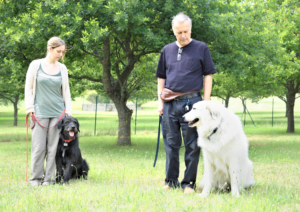
Why Dogs Listen Better at Home
Home is familiar. There are fewer surprises, fewer competing interests, and a predictable environment. Your dog knows what to expect and can focus more easily.
Outside, however, the world becomes much more exciting. Every walk introduces new smells, sounds, people, animals, and movement. To a dog, these distractions can be far more interesting than listening to a command they’ve practiced in a quiet living room.
This is why a dog that appears fully trained indoors may seem completely different outdoors.
Distractions Change the Difficulty Level
Training isn’t simply about teaching a command. It’s about teaching a dog to perform that command under different circumstances.
Think about a child learning math. Solving a problem in a quiet classroom is different from solving one in a crowded, noisy room. The skill remains the same, but the environment makes it harder.
Dogs experience something similar. Sitting in the kitchen may be easy. Sitting calmly while another dog walks past is a completely different challenge.
The command hasn’t changed. The level of difficulty has.
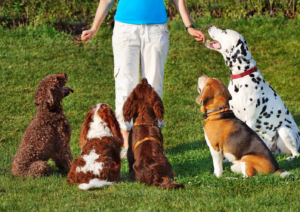
Dogs Need Practice in Real Situations
One of the most common mistakes owners make is assuming a dog understands a behavior everywhere once they learn it in one place.
Dogs don’t naturally generalize lessons the way people do. A dog may understand “sit” in the house but still need practice responding to the same command at the park, on a sidewalk, or near a playground.
Each new environment teaches the dog that the command still applies, regardless of what’s happening around them.
Without that practice, distractions will often win.
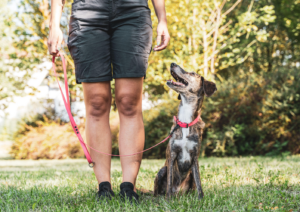
The Goal Isn’t Perfect Focus
Many people expect their dog to ignore everything around them. That’s not realistic.
Dogs are naturally curious. They should notice birds, people, smells, and activity around them. The goal isn’t to eliminate their interest in the world.
The goal is teaching them how to acknowledge those distractions without losing control or ignoring their handler completely.
A well-trained dog can notice something exciting and still make the choice to respond when asked.
Building Focus Gradually
One reason dogs struggle with distractions is because the challenge increases too quickly.
If a dog can barely focus in a quiet backyard, taking them straight to a crowded festival or busy park often sets them up to fail.
Successful training usually happens in stages. Dogs learn best when distractions are introduced gradually. As they become more reliable in one setting, they can move on to slightly more challenging environments.
This steady progression helps build confidence and understanding rather than frustration.

Why Consistency Matters
Training around distractions isn’t something that gets mastered overnight. It develops through repetition and experience.
Small moments matter. Asking your dog to sit before greeting someone, checking in during a walk, or waiting calmly before crossing a street all reinforce important skills.
Over time, these everyday opportunities help your dog learn that listening isn’t something they do only at home. It’s something they do wherever they go.
When Dogs “Fall Apart”
Sometimes owners see their dog struggle around distractions and assume the training isn’t working.
More often, it simply means the dog has reached a level they haven’t fully mastered yet.
Rather than viewing it as failure, think of it as information. Your dog is showing you where they need more practice.
Every distraction your dog successfully works through becomes another step toward reliability.

Final Thoughts
The true test of training isn’t what your dog does in a quiet room. It’s what they do when the world becomes exciting.
Distractions are where focus, communication, and consistency come together. They reveal the difference between a behavior that has been learned and a behavior that has been fully understood.
The more opportunities your dog has to practice around real-world distractions, the more dependable their training becomes. That’s how dogs learn to stay connected to their owners, even when everything around them is competing for their attention.
Website Contact Form
"*" indicates required fields