Why Duration, Distance, and Distraction Matter in Dog Training
Teaching your dog a command is only the first step in dog training. Many owners get excited when their dog can sit, stay, or come when called in the living room, but then become frustrated when those same commands seem to disappear outside the house.
The truth is that reliable obedience isn’t built by teaching a command once. It’s built by gradually increasing the difficulty until your dog can succeed in everyday situations. That’s where duration, distance, and distraction come in.
These three elements are the foundation of dependable dog training. They help turn a behavior your dog knows into one your dog can perform almost anywhere.
Duration Teaches Patience
Duration refers to how long your dog can hold a behavior before being released.
For example, asking your dog to sit for two seconds is very different from asking them to remain sitting while you answer the front door or have a conversation with a neighbor.
Many dogs learn a command quickly but struggle when they’re expected to hold it for longer periods. That’s normal. Patience is a skill that develops over time.
The best approach is to build duration gradually. Start with just a few seconds, reward your dog for staying in position, and slowly increase the time as they become more successful.
Distance Builds Independence
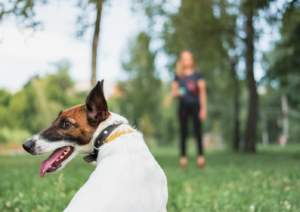
Distance is how far you can move away from your dog while they continue to perform the behavior.
A dog may stay perfectly when you’re standing right beside them, but get up as soon as you take a few steps away. That doesn’t mean they’ve forgotten the command. It simply means they haven’t learned that the expectation remains the same even when you’re farther away.
Practicing distance helps your dog stay focused without needing you to be right next to them. This becomes useful in everyday situations, whether you’re opening the door, unloading groceries, or asking your dog to wait while you move around the house.
Distractions Test the Training
Distractions are often where owners realize how much more practice their dog needs.
It’s easy for a dog to listen in a quiet home. It’s much harder when another dog walks by, children are playing nearby, or exciting smells are everywhere.
Distractions compete for your dog’s attention, so expecting perfect obedience in a busy environment without preparing for it first often leads to frustration.
Instead of avoiding distractions, introduce them gradually. Begin in a calm environment, then slowly practice in places with more activity as your dog gains confidence.
Don’t Change Everything at Once
One of the biggest mistakes in training is increasing all three challenges at the same time.
For example, asking your dog to stay for several minutes while you’re far away in a busy park is a lot to expect if they’ve only practiced at home.
A better approach is to focus on one challenge at a time. If you’re increasing duration, keep the distance short and work in a quiet environment. If you’re practicing around distractions, shorten the duration and stay close to your dog.
This allows your dog to succeed while building confidence instead of becoming overwhelmed.
Progress Takes Time
Every dog learns at a different pace. Some pick up new challenges quickly, while others need more repetition before they become comfortable.
The goal isn’t to rush through training. It’s to build a solid foundation that your dog can rely on no matter where they are.
Celebrating small improvements and practicing consistently will always produce better results than moving ahead too quickly.
Real-Life Situations Bring Everything Together
Once your dog understands duration, distance, and distraction individually, you’ll begin to see those skills come together in everyday life.
Your dog becomes more reliable when guests visit, walks become more enjoyable, and everyday routines feel less stressful because your dog understands how to stay focused even when things around them change.
This is what transforms basic obedience into dependable behavior.
Final Thoughts
Teaching a command is only the beginning. For your dog to respond consistently in the real world, they need to learn how to hold a behavior for longer periods, perform it even when you’re farther away, and stay focused despite distractions.
By building duration, distance, and distraction gradually, you’re helping your dog develop confidence, reliability, and the ability to make good decisions wherever life takes you together.
Website Contact Form
"*" indicates required fields
PPC Contact Form
"*" indicates required fields