How Weather Changes Affect Your Dog’s Behavior
Weather doesn’t just change your plans—it affects your dog’s behavior too. From sudden heat to rainy days or seasonal shifts, changes in weather can influence your dog’s mood, energy level, and behavior.
Some dogs become more restless, others slow down, and some may even develop new habits during certain conditions. Understanding these changes—and knowing how to adjust your training—helps keep your dog balanced no matter the season.
Heat Can Lower Focus and Patience
Warmer weather often makes dogs more tired and less responsive. Just like people, dogs can feel sluggish in the heat, which can affect how well they listen.
You might notice:
- Slower responses to commands
- Less interest in training
- Irritability or restlessness
How to train through it:
Keep sessions shorter and train during cooler times of the day, like early morning or evening. Focus on reinforcing simple commands rather than introducing new ones. This keeps your dog engaged without overwhelming them.

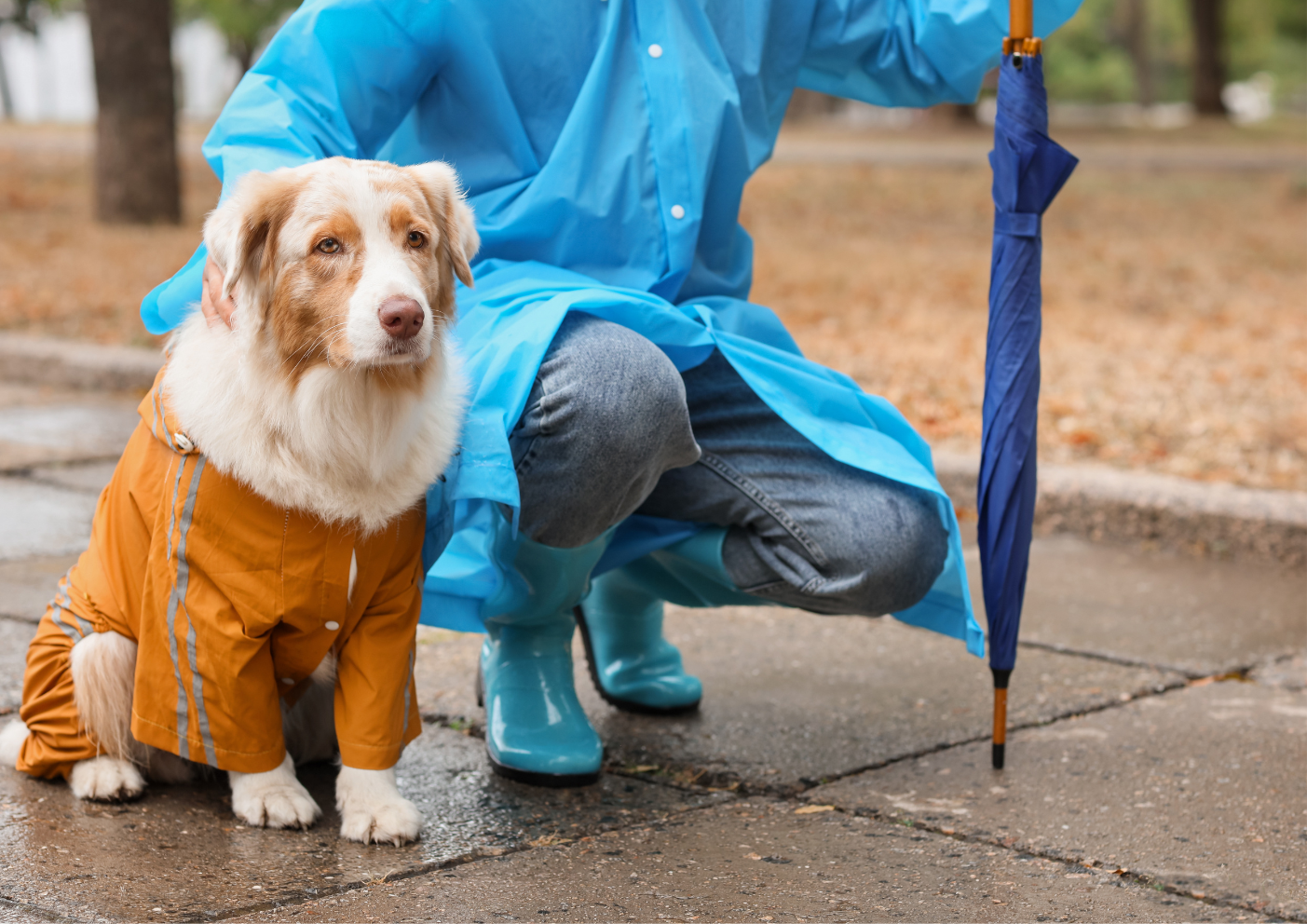
Rainy Days Can Lead to Built-Up Energy
When it rains, dogs often get less outdoor time. This can lead to pent-up energy, which shows up as hyperactivity, barking, or destructive behavior indoors.
How to train through it:
Use indoor training to your advantage. Practice commands like “place,” or “recall” and teach a new trick inside the house. You can also introduce mental exercises like food puzzles or structured play to burn energy in a controlled way.
Rainy days are actually a great opportunity to strengthen focus without outdoor distractions.
Cold Weather Can Affect Motivation
Some dogs become less willing to move or participate in training when it’s cold, especially short-haired breeds or smaller dogs.
You may see:
- Hesitation to go outside
- Slower movement
- Reduced engagement
How to train through it:
Keep training sessions brief and positive. Use higher-value rewards to maintain interest. If needed, shift more training indoors while still reinforcing structure and commands.

Storms and Loud Weather Can Cause Anxiety
Thunderstorms, strong winds, and sudden weather changes can make some dogs anxious or fearful. This may show up as pacing, hiding, whining, or destructive behavior.
How to train through it:
Focus on creating a calm, safe space for your dog. Reinforce commands like “place” to help them settle. Keep your tone calm and avoid overreacting, as dogs often mirror your energy.
You can also pair calm behavior with rewards to help your dog build a more positive association with these situations over time.
Consistency Matters More Than the Weather
No matter the season, the key to maintaining good behavior is consistency. Weather may change your environment, but your expectations should stay the same.
Your dog should still:
- Respond to commands
- Walk with control
- Follow household rules
Adjust how you train, not what you expect.
Final Thoughts
Weather changes can influence your dog’s behavior in ways that aren’t always obvious. Energy levels shift, focus changes, and new distractions appear. But these moments aren’t setbacks—they’re opportunities.
By adjusting your training to match the environment, you help your dog stay consistent and confident in any condition. Over time, this builds a dog that listens not just when it’s easy, but even when the world around them changes.
"*" indicates required fields